
Article by Mark Wembridge, courtesy of Financial Review
29.12.2025
Bannister Downs, run by third generation dairy farmers, Sue and Mat Daubney, is the cream of the crop in a struggling industry.
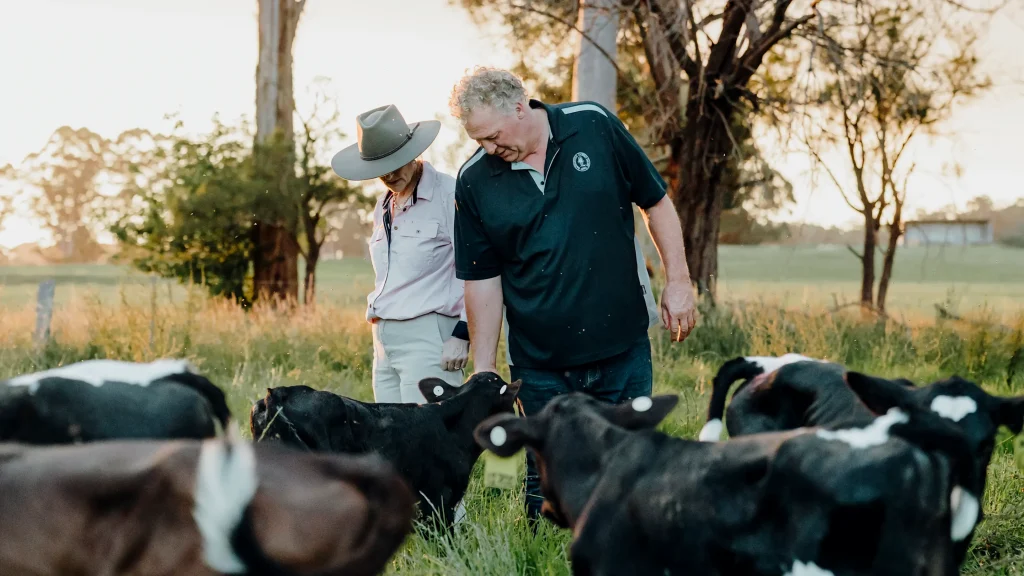
Western Australia’s picturesque South West region holds a well-earned reputation as a foodie heaven. Margaret River is renowned for its wineries, Manjimup has truffles, Pemberton is apple country, while Northcliffe boasts a dairy.
It’s no ordinary dairy. Bannister Downs’ architecturally striking creamery is a state-of-the-art, 24-hour automated facility that will next year reopen to visitors, allowing tourists to view its operations and sample its products. And it’s part-owned by Australia’s richest person, Gina Rinehart.
In an industry beset by low milk prices, ballooning costs, intense competition and razor-thin margins, Bannister Downs has successfully taken on the state’s major producers to carve out a niche and profitable slice of the local market.
By hitching the dairy’s fortunes to Rinehart – her wealth is estimated at $38 billion on the Financial Review Rich List – the farm’s third-generation owners Mat and Suzanne Daubney have expanded the business. They now supply 600 customers, which include supermarket chains Coles, Woolworths and IGA, with dairy goods that they and 75 staff produce and process on site.
Through her private company, Hancock Prospecting, Rinehart bought a half share in the now century-old dairy in late 2014. It was this financial firepower that funded the $20 million construction of its 5000 square metre, two-storey processing plant. The investment supercharged the farm’s milk production four-fold and birthed a regional attraction.
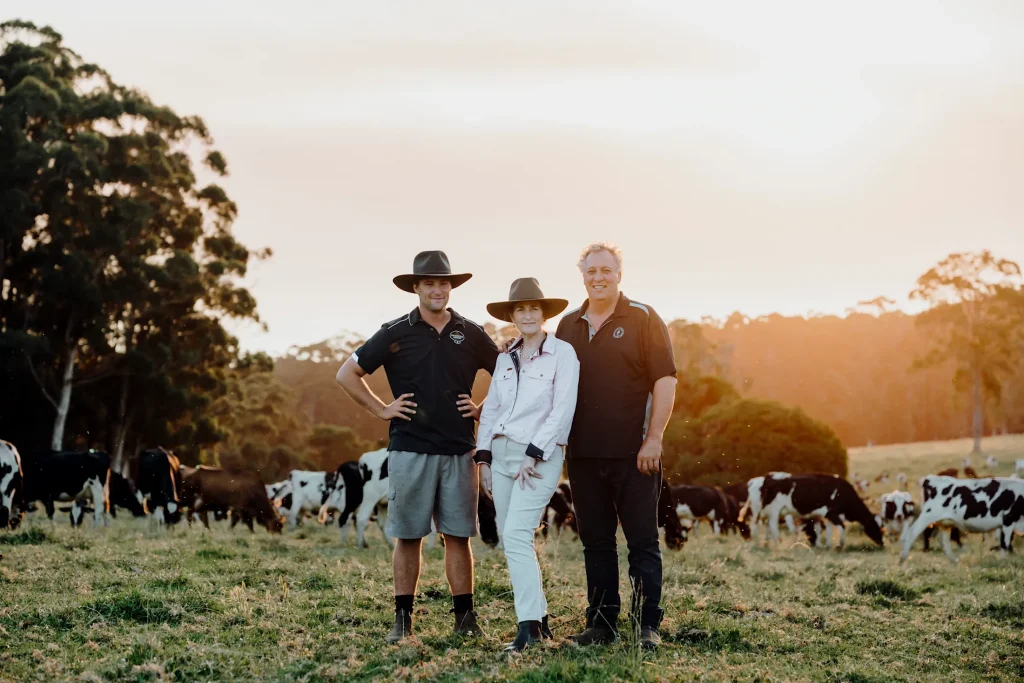
In the early 2000s, the Daubneys began processing and selling their own milk instead of sending it elsewhere for pasteurisation, packaging and sale. “Then we thought: ‘What if we have a go at making our product available to the consumer?’,” says Suzanne Daubney. “The reaction was amazing. People loved it.
“Based on that, we decided we needed to expand. To do that, we needed to invest in a new site … and it was about that time that Mrs Rinehart happened to be looking to invest in dairy, and the stars aligned.” And yet, even with Rinehart’s deep pockets and the likes of Bannister Downs, Western Australia may potentially experience a milk shortfall this summer, meaning that milk could be hauled across the Nullarbor from South Australia to fill WA’s appetite for roughly 1 million litres per day.
Western Australia is a state awash with high-paying mining jobs, so farming’s early starts, long hours and relatively low salaries make recruitment a tough sell. Furthermore, the economic cards are stacked against smaller, family-run dairy farms.
The number of dairy farmers in WA have dropped below 100, down from 800 in the 1960s, according to Trevor Whittington, chief executive of the WA Farmers Federation.
The industry’s deregulation in 2000 was a catalyst for the fall in dairy farmer numbers. Government price controls were axed in an attempt to give farmers more power over their sales, but the move instead heaped pressure on milk prices and led to the closure of hundreds of farms.
WA dairy farms need a minimum of 800 cows to stand a chance of churning a profit, Whittington estimates, meaning that those with strong financial backing are best placed to survive.
“[WA] dairies are the biggest in Australia, but they don’t tend to make much money because it’s an isolated market,” Whittington says. New high-tech dairies cost millions of dollars to build, with low margins condemning farmers to a long-term payback on their investment. Hence, big players and those funded by billionaires have a stronger foothold.
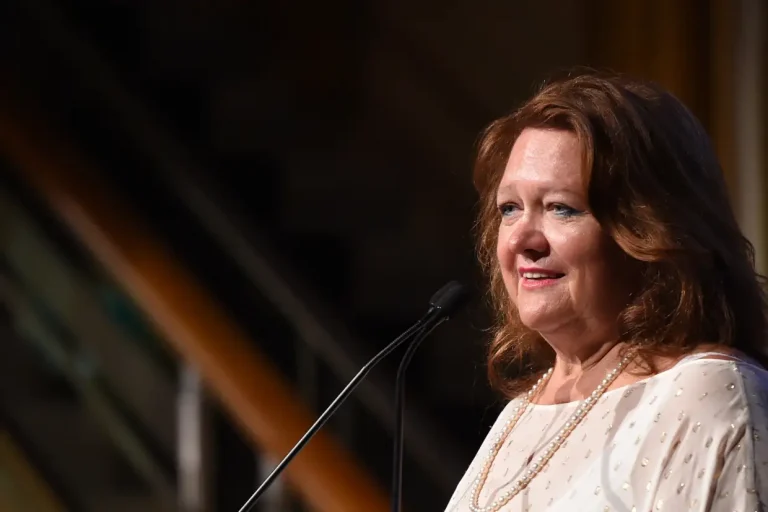
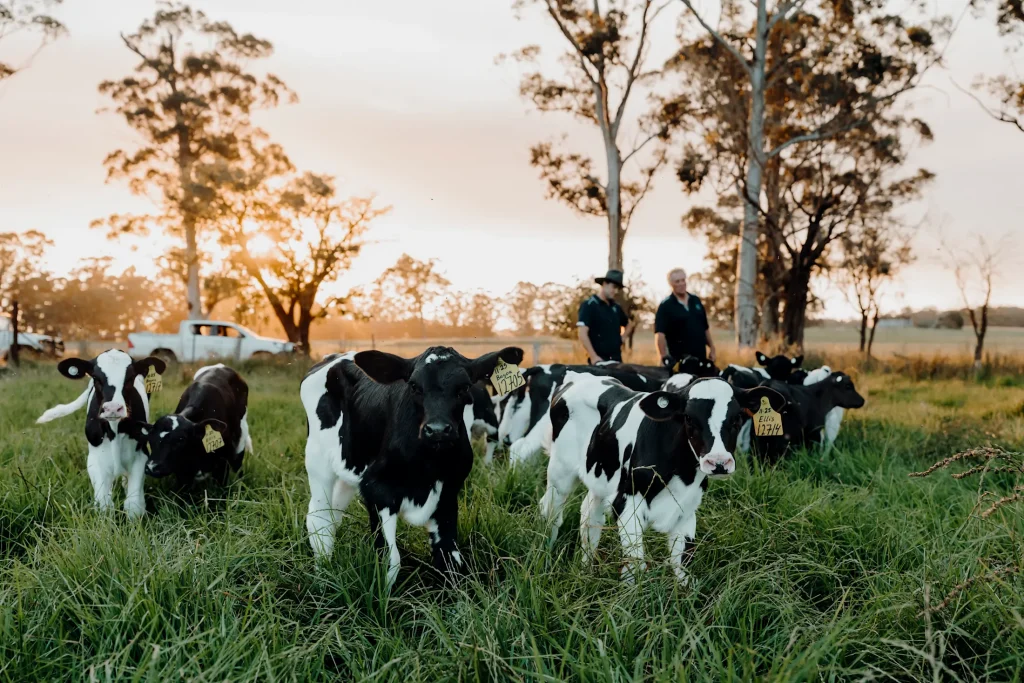
Bannister Downs, which was established in 1924, has grown to survive. Located about 250 kilometres south of Perth, the farm covers 4850 hectares and runs about 5000 cattle, making it one of the bigger operations in the state. About 2000 cows are used for milking, producing roughly 35,000 litres a day.
The farm has a conventional dairy and a separate modern, robotic dairy called “the creamery” that uses a voluntary milking set-up and automated processing. The creamery’s technology improves food safety, traceability and helps with preventative health management in the milking herd, Daubney says.
“We use the world’s best processing equipment, which means that people don’t touch anything. It’s all automated, so it makes sure that the product quality is paramount,” says Daubney
“We have a herd milking 24-hours a day,” Mat Daubney, the 52-year-old grandson of the farm’s founders Edith and James Daubney, says in a promotional video on the dairy’s website.
“It has full robotic milking, so cows come in when they want to be milked. They can have a massage on the brushes on the way in – these little brushes that turn and make their life pleasant.”
Pandemic restrictions closed the creamery to visitors in 2020, and the Daubneys plan to reopen the facility to the public in 2026. “In the past, we have had up to 140 people come and visit on any one day because it’s something quite unique,” says Suzanne Daubney.
The dairy pasteurises its milk at a lower than usual temperature over a longer period – a technique that the Daubneys believe improves its flavour and shelf life.
“Agriculture is the long-term backbone of our national identity, and essential for our future.”
— Gina Rinehart, Hancock Prospecting executive chairwoman
Researchers at Murdoch University studied milk from six farms, including the Daubney’s, and found that Bannister Downs’ contained higher levels of proteins and other nutrients.
The dairy uses environmentally friendly packaging made from crushed limestone, and its products include premium milk, flavoured milk and ice cream, selling predominantly to the WA market but with small amounts being exported to Asia.
Western Australia’s dairy farmers can be paid as little as 70¢ per litre for their milk – a figure that Ian Noakes, president of the WA Farmers Dairy Council, says is less than in other states and sometimes below the cost of their production.
Both retailers and processors blame each other for the downward pressure on prices, with supermarkets often using cheap milk as a seemingly family-friendly way to entice customers through their doors. Such practices are, however, not farmer friendly.
At the same time, the state is facing a potential milk shortfall over the summer because WA production fluctuates with seasonal rainfall, Noakes says.
“If there are no price increases very shortly, then even more damage will be done [to the industry]. People are leaving the industry to work elsewhere – farmers are on the point of exiting because WA is an expensive place to do business,” Noakes says.
WA dairy is dominated by three big producers – Masters, Brownes and Harvey Fresh. Masters is owned by Bega, the Australian dairy group backed by Tattarang, the private company of another WA mining billionaire and Rinehart rival Andrew Forrest.
Harvey Fresh is owned by French diary giant Lactalis, while Brownes is up for sale after its Chinese parent Australian Zhiran defaulted on a $200 million loan from Mengniu Dairy.
“People are getting out of dairy farming for a combination of reasons. Electricity costs are high. All costs are high. Our mechanics are competing with the mining industry. Everything we touch on our farm is probably more expensive than anywhere else in Australia, and we haven’t had a [milk] price rise for two or three years,” says Noakes.
Amid the problems afflicting the dairy industry, Bannister Downs has thrived, winning dozens of awards, including the Grand Champion Dairy Product gong at the 2024 Australian Grand Dairy Awards, and earning widespread respect from the agricultural industry.
“Sue? She’s a bloody champion,” Tony Seabrook, president of the Pastoralists & Graziers Association of WA, says of Daubney.
“The way that the dairy industry has readjusted itself has been absolutely brutal. It’s horrible, the number of people who have had to quit the industry after two or three generations building up a herd.
“The only way forward will involve huge amounts of capital, and that’s what they’ve done at Bannister Downs. I think that what they’ve done is fantastic. And they produce good milk, I’ve got some in my fridge right now.”
Rinehart, who built her fortune from selling iron ore to China, has expanded into agriculture, including cattle stations. She is not shy about calling out what she believes are government failings regarding the sector.
“Agriculture is the long-term backbone of our national identity, and essential for our future. Bannister Downs was a dairy pioneer and is now WA’s leading dairy producer,” Rinehart says.
“The agricultural industry is a low profit margin industry, and [we must] stand up for agriculture and defend it. A nation that cannot feed itself is a nation at risk, and domestic food production is critical to our sovereignty.”
Rinehart’s influence on Bannister Downs can be seen beyond her financial backing, with links between the billionaire and the Daubneys running deep.
Hancock Prospecting executive general manager Daniel Wade is a director of Future Fields, Bannister Downs’ parent company. Suzanne Daubney served for three years as a director at Rinehart Medical, a body that oversees the billionaire’s philanthropic pursuits to improve healthcare in regional areas, such as the Royal Flying Doctor Service.
Daubney is also a director at the Bunbury Farmers Market, another Rinehart investment in WA’s southwest. Hancock paid $58.5 million for a 60 per cent stake in the market in 2023. The market has developed something of a cult following in the region, drawing in passing tourists visiting the Busselton, Dunsborough and Margaret River regions.
Rinehart’s other agricultural investments include beef producers S. Kidman & Co, and 2GR Premium Wagyu Beef.
The Daubneys have, however, seemingly had less success navigating Perth’s property market. Suzanne Daubney lost almost $2 million from the sale of a three-storey house in the exclusive beachside suburb of Cottesloe, having bought the Broome Street property for $9.15 million in 2022 and sold it for $7.25 million in June 2025.
In 2021, Suzanne Daubney bought a $7.8 million house on Irvine Street in nearby Peppermint Grove, not far from Rinehart’s waterfront mansion in the elite area of Dalkeith.
Northcliffe takes its name from Lord Northcliffe, the outspoken turn-of-the-20th-century British media baron whose populist views proliferated in his Daily Mail and Daily Mirror newspapers.
In similar fashion to the campaigns waged by the town’s namesake, Rinehart and the Daubneys have taken aim at soaring energy prices, which they attribute to the introduction of renewables and net zero policies.
“Australians were promised cheaper power from wrongly called renewables, but instead we’ve ended up with toxic solar panels and toxic bird and bat killing asbestos riddled wind towers, mainly imported, ruining extensive productive farmland areas and ruining farmers lives,” says Rinehart.

“We must scrap the disastrous net zero policy altogether to bring down electricity prices … to help farmers produce the freshest quality dairy, and all other farm produce.”
Suzanne Daubney says high electricity prices are particularly damaging to the energy-intensive dairy industry, noting that the farm’s monthly electricity bill has more than doubled over the past year to $44,000, which she attributed to a “renewable focus”.
The higher energy bills, including $15,000 of monthly gas use, come despite the farm supplementing its power with a 100 kilowatt solar operation.
Despite the headwinds for farmers, the Daubneys are overwhelmingly pleased to have the backing of Australia’s richest person.
“[Rinehart] is extremely committed to agriculture and to Australia,” Suzanne Daubney says. “She has a strong sense of right and wrong, and it might not always be the most popular stand to take. Having Australia’s best interest drives a lot of what she does.”
“All manufacturers across Australia would be experiencing a similar thing. The cost of food is going to go up, because of the increasing cost of supplies, particularly energy. Every processor and every food company is doing their best not to increase prices,” she says.
