
Edited by Damián Morais, courtesy of Edairy news
29.12.2025
Bannister Downs thrives in WA’s tough dairy sector thanks to Gina Rinehart’s backing, heavy investment and high-tech milk processing.
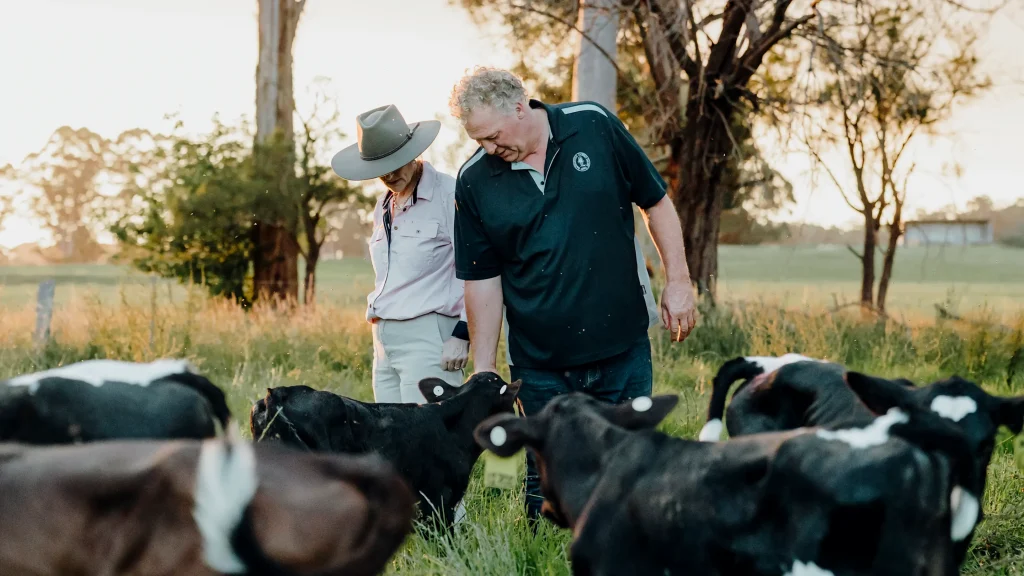
Bannister Downs shows how capital, scale and technology can deliver profits in a struggling dairy sector.
Bannister Downs, a third-generation dairy in Western Australia’s South West run by Sue and Mat Daubney, has emerged as a standout success in an industry under pressure from low milk prices, rising costs and shrinking farmer numbers. Its transformation accelerated after Australia’s richest person, Gina Rinehart, took a 50% stake in the business in 2014 through Hancock Prospecting, providing the financial strength needed to expand and modernize operations.
Rinehart’s investment funded a $20 million, state-of-the-art processing facility, enabling Bannister Downs to process milk on site and supply around 600 customers, including major retailers such as Coles, Woolworths and IGA. The expansion quadrupled milk production and positioned the dairy as both a profitable business and a regional attraction, with plans to reopen the automated creamery to visitors in 2026.
While Bannister Downs has grown to run about 5,000 cattle across 4,850 hectares and produce roughly 35,000 litres of milk per day, the broader WA dairy sector continues to struggle. Farmer numbers have fallen below 100, down from 800 in the 1960s, driven by deregulation, isolation from major markets, high costs and milk prices that can dip to 70 cents per litre, sometimes below production costs.
Industry leaders say scale and capital are now essential for survival in Western Australia, where farms may need at least 800 cows to be viable. High-tech dairies require multimillion-dollar investments with long payback periods, giving large players and billionaire-backed operations a clear advantage. Despite strong performers like Bannister Downs, WA still faces the risk of seasonal milk shortages and may need to import milk from other states.
Bannister Downs’ model combines automation, food safety, traceability and premium branding, with products sold mainly in WA and small volumes exported to Asia. The dairy has won multiple national awards and gained strong industry recognition, reinforcing the view that significant capital, technological investment and vertical integration are increasingly critical for profitability and resilience in modern dairy farming.
Source: Australian Financial Review
